In January someone made a cryptocurrency based on my life without asking me.
I woke up to a DM from BigCrazyApe, “Yo Mike, there’s a KmikeyM coin on Bags. You might want to claim your earnings.” I ignored it for a because “free money” emails, texts, phone calls are obvious spam. But BigCrazyApe wasn’t alone, and messages started to get through the actual and my mental spam filters. They really kept at it… an unrelenting mob of degens on every platform I have.
I have been a publicly traded person for 18 years. I hope every weird financial idea finds me. But nobody had yet built a whole second economy around my existence and granted me a share of the profits. My first reaction was: why didn’t they just buy shares?
When I looked into the platform, it wasn’t reassuring… The co-founder’s previous app got a $5 million FTC fine for deceptive practices. The main founder is anonymous. The fee structure is opaque. Anyone can launch a token in a creator’s name, then pressure the creator to “claim” the fees that pile up. It looked like an exit scam with some window dressing (and to be honest, I think it is an exit scam with window dressing).
With my paranoia riding shotgun, I dug out an old Solana wallet and claimed my “bag.” I sent the money straight to Coinbase, then to my bank, then pulled out cash. I kept waiting for the part where it turned out to be fake and someone in that chain of custody asked for the money back. But no one did… and the degens were so excited I claimed! Over a few weeks I earned a bunch of money in trading fees from a token I didn’t create on a platform I don’t trust.
This was my most profitable crypto experience, but not my first. The old Solana wallet was there for a reason.
In 2021, thanks to an enthusiastic shareholder, I got into NBA Top Shot, basketball highlights sold as NFTs, and I created a collection of Spencer Dinwiddie moments (because he had an idea to tokenize his NBA contract).
Then I took a job at Roll. Roll described itself as a platform for “social money,” where any creator or community could mint their own token, and the pitch was that a token would do for a community what shares had done for me. That was the thing I had spent thirteen years building by hand, so I went to work there thinking I could help develop a real theory of fractional community. Nine months before I started, someone had drained Roll’s hot wallet of 3,000 ETH, about $5.7 million, and nobody at the company ever figured out how it happened. Roll seemed to have a very focused hustle: associate with famous people and exploit the connections. Nobody there had a theory of what a fractional community should be, only a sense that it would be valuable eventually. I lasted a year. It was the worst job I ever had.
While I was there, Marcus and I minted our own token and called it EGG. The idea was a small investing club for people who like weird bets. I wanted to experiement with everything that is not stocks, bonds, or cash. We set up an on-chain investment club, we made a podcast, we drew a roadmap. But our mistake was we built on other people’s infrastructure, which seemed perfectly aligned at the time and less aligned each time they pivoted.
So I knew what a token looked like when it was somebody else’s idea of how it should work. But to their credit, the Bags community was fun. They seemed to know it was a rigged casino and play anyway. Maybe they wanted it to be real, or, like fans of professional wrestling, found it more fun to embrace the fiction? I ran polls with them, like mini shareholder votes. The funniest was what movie I should watch… and the poll tied, so I watched both movies at once and sent them screenshots. They asked real questions about shareholder democracy versus speculation, and seemed excited about an 18-year governance project in ways most people don’t try to understand. They were, like me, a bunch of nerds. I wrote them a welcome at the time, and most of it still holds.
To bridge the memecoin degens and the shareholders, I put up a vote: What percentage of the trading fees should go to buying KmikeyM shares? – And they chose 5%
That 5% became the degen account, which holds shares and cash, has voting rights, and is run by a longtime shareholder named Austin. It is the one piece of the Bags experience that is still alive.

Three days after the peak the token was down 72%. It was a steady decline, and even the most enthusiastic hodlers had to admit the ride was over. I think two or three of them bought shares. The rest, I am guessing, were off chasing the next pump and dump.
A couple of weeks later the same people who launched it DM’d me with the next idea: migrate to pump.fun, where creator fees are 0.30% of every trade, and let their team “vibecode” a voting system. But a friend with experience in the degen world warned me off round two. The folks who set up the first coin probably made sixty or seventy grand, and everyone else lost it all. I declined.
By April the whole memecoin market had fallen off a cliff. Pump.fun volume was down 97% from January. With occasional anon accounts DM’ing me on X about a new run, I set a rule for myself: no crypto play is worth considering unless there is a clear path to $50,000. Anything smaller is not worth the reputation, the attention, or the distraction from the rest of life. All token ideas went on the back burner, and I mostly stopped thinking about them.
Then, in September, an longtime shareholder DM’d me on X.
He had bought and traded shares years ago, and now he had an idea. “You have an opportunity now to put to a vote to tokenize the stock and shares on Robinhood. Let me know before you do.”
I was interested… or I should say I was skeptically curious. Not in the pitch, exactly, but in the question underneath it. Could KmikeyM actually be on Robinhood? Eighteen years of building a market by hand, and here was a mainstream brokerage app that had just started tokenizing stocks. I wrote back, asked what he had built and what the path forward looked like, and said I was skeptical.
I looked for myself. On September 17 the SEC issued a five year exemption that lets certain venues trade tokenized shares on chain, and it covers listed stock only, of course. Robinhood has its own Stock Tokens, but those are debt instruments issued by a Robinhood entity in Jersey, for European customers, and explicitly “not offered, sold, or delivered in the United States or to U.S. persons.” And Robinhood Chain, a permissionless network that went live in July, lets anyone deploy a token, fund a pool, and trade it immediately. That door is open, trivially. But it is not “on Robinhood.” A token on the chain lives on a decentralized exchange, reachable through a wallet. It does not appear in the app. Robinhood’s own documentation says chain deployment and regulated distribution are separate workstreams. The respectable version and the casino version turned out to be the same product. Bags on an L2.
My shareholder’s reply said the same thing. The Robinhood part was, in his mind, a “phase two” (aka not possible, and to me, incredibly unlikely). He thought it would need an SPV and a broker-dealer, which of course it might, which is also why it’s not feasible. His real pitch was a new coin on pump.fun, a deal I had already turned down.
Unfortunately, it was just Bags all over again.
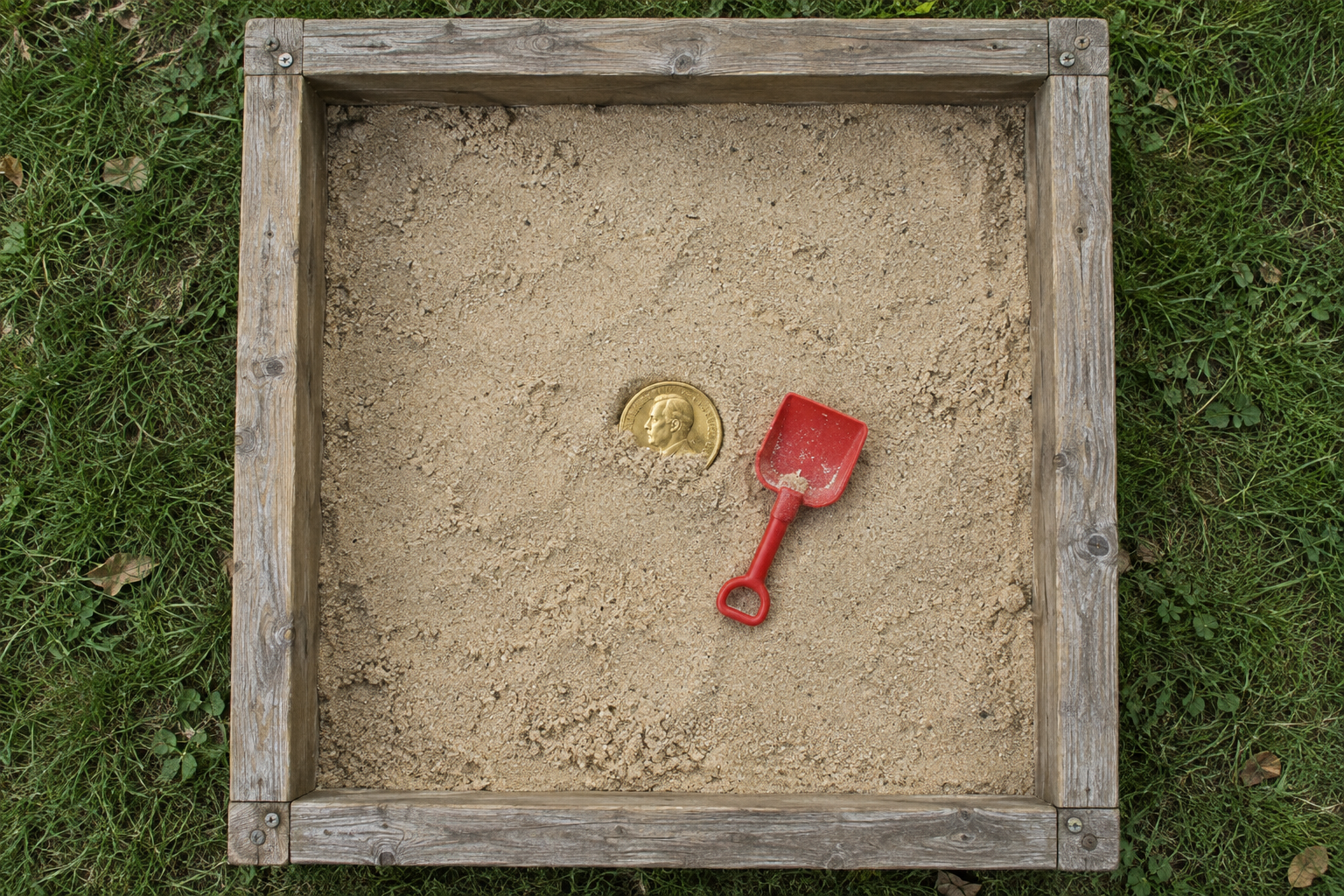
As far as I know the memecoin scene has yet to build a long-term community. I tried when it happened to me. I liked the people, but the economics were rigged, and it evaporated in a few weeks. I remain curious about crypto rails, but I have watched a lot of them crash or get abandoned, and I still don’t think they are consumer ready. KmikeyM has run for 18 years because the community and I are in control. Migrating that onto someone else’s infrastructure, with someone else’s fees and someone else’s rules, is playing in someone else’s sandbox… I politely declined.
But I appreciated the idea, and I dropped a bonus share in his account as a thank you. He is a shareholder, and I like to encourage people. If the next idea is good, maybe we put it to a vote.
He would be joining a vote that already happened. Two years ago my shareholders set the official KmikeyM stance on crypto. Out of five options they picked “Skeptical Observer“: skeptical about the widespread adoption and long-term viability of cryptocurrencies, finds the concept interesting, treat it more as a subject of curiosity than a serious investment.
I have now lived every word of that. But within that skepticism, I’ll admit, I’m still curious.
You must be logged in to post a comment.